Industrie


PC industriels : des plateformes performantes pour vos projets d’automatisation
La transformation numérique de l’industrie impose de nouvelles exigences aux infrastructures IT. Interconnexion des machines, capteurs intelligents, Edge Computing, analyse de données en temps réel : les PC industriels (IPC) sont devenus des éléments centraux des architectures modernes.
Pour les revendeurs et intégrateurs, ils représentent une plateforme stratégique permettant de proposer des solutions fiables, évolutives et à forte valeur ajoutée – à l’interface entre l’OT (Operational Technology) et l’IT.
Qu’est-ce qu’un PC industriel ? – Une base fiable pour les environnements critiques
Un PC industriel est un système informatique conçu pour fonctionner dans des environnements exigeants. Il est conçu pour offrir stabilité, longévité et sécurité d’investissement.
Caractéristiques typiques :
- Résistance aux températures extrêmes, à la poussière, à l’humidité et aux vibrations
- Composants haut de gamme avec une disponibilité longue durée
- Conception fanless pour une maintenance réduite
- Options de montage flexibles (mural, rail DIN, rack 19 pouces, VESA)
- Large choix d’interfaces (USB, LAN, COM, DIO, HDMI/DisplayPort)
Principaux formats
- Box PC – Puissants, avec radiateur extérieur, idéaux pour armoires électriques, machines et autres environnements de production exigeants
- Panel PC – PC industriels avec écran tactile intégré pour les applications IHM, visualisation et postes opérateurs
- Edge PC – Systèmes performants pour le traitement local des données, l’IA embarquée, et les architectures Edge
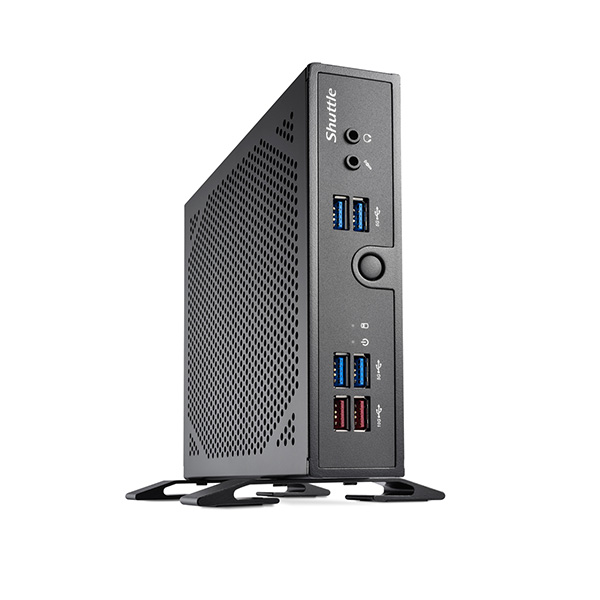
- Slim PC – Compacts, sans ventilateur, avec un châssis métallique robuste, et un large choix de processeurs adaptés aux besoins
Domaines d’application – Des opportunités dans de nombreux secteurs
Les PC industriels sont utilisés dans presque tous les secteurs : de l’automatisation à la logistique, les infrastructures, l’énergie ainsi que la gestion technique des bâtiments.
Les exigences varient selon l’application :
Fabrication & pilotage de machines
- Connexion en quasi temps réel des capteurs
- Interfaces série (RS232/422/485) et E/S numériques
- Fonctionnement 24/7 fiable
- Redémarrage automatique via un cavalier physique Always ON
- Intégration dans des environnements critiques
Smart Factory & applications Edge
- Prétraitement des données directement à la source
- Connexions réseau rapides (LAN jusqu’à 10 Gbit/s, Wi-Fi 6)
- Fonctions d’analyse et de visualisation
Affichage dynamique & gestion technique des bâtiments
- Multi-affichage
- Design compact
- Gestion à distance
- Fiabilité opérationnelle, même en fonctionnement continu
Architecture matérielle : que contient un IPC moderne ?
Boîtier compact & refroidissement passif
Shuttle maîtrise depuis de longues années la technique du refroidissement passif, basée sur l’utilisation de caloducs qui extraient la chaleur dégagée par le processeur vers des radiateurs internes. C’est le cas des Slim-PC fanless et des Panel PC, ainsi que les PC All-in-One.
Les Box PC et les Edge PC fanless ont, quant à eux, un radiateur en aluminium nervuré sur le châssis qui optimise le refroidissement passif, par un échange thermique direct avec l’air ambiant. Ils sont particulièrement adaptés aux environnements poussiéreux, ou soumis à de fortes vibrations, et ils permettent un fonctionnement fiable avec une maintenance réduite.
Les Slim PC fanless sont appréciés par leur compacité, leur comportement éco-énergétique, et leur fonctionnement totalement silencieux.
Les Panel PC sont équipés d’un écran IP65, d’un châssis en aluminium renforcé pouvant recevoir un traitement spécial adapté aux applications à haut niveau d’hygiène. La technologie fanless assure silence et longévité.
Performance processeur selon les besoins
Les PC intègrent un large éventail de processeurs économes en énergie comme les Intel® Celeron® ou Pentium®, mais aussi des Intel® Core™ i3, i5, i7 ou i9 plus puissants. Les générations Intel® Ultra™ intègrent, quant à elles, des unités de traitement neuronal (NPU) et des cartes graphiques jouant le rôle d’accélérateur d’IA.
Selon l’application, des accélérateurs matériels peuvent aussi être ajoutés aux barebones pour l’analyse IA, ou le traitement d’images industrielles.
Mémoire & stockage
Avec jusqu’à 96 Go de RAM et des SSD NVMe ultra-rapides, les systèmes actuels traitent les données de façon fluide, et contiennent des capacités de stockage énormes dans de tous petits volumes. Ils répondent aux applications les plus exigeantes telles que la visualisation, l’enregistrement de données, le prétraitement ou l’analyse locale.
Connectivité pour une intégration flexible
Un large choix d’interfaces garantit une intégration simple dans les environnements industriels existants :
- Plusieurs ports LAN (jusqu’à 10 Gbit/s)
- USB 3.2 / USB-C
- RS232/422/485
- HDMI / DisplayPort pour configurations multi-écrans
- Entrées / sorties numériques (DIO)
Tendances & importance stratégique des PC industriels
Edge Computing & IA locale
Le traitement des données s’effectue de plus en plus directement à la source. Les Edge PC réduisent la latence et la dépendance au cloud, tout en permettant des décisions en temps réel.
Cybersécurité industrielle
Avec l’augmentation de la connectivité, les risques de cyberattaques progressent également. Des fonctionnalités telles que TPM 2.0 et Secure Boot contribuent à protéger les systèmes de production. Les doubles ports réseau permettent, outre l’équilibre des charges, une séparation physique entre le réseau externe et le réseau local.
Disponibilité long terme & maintenance
Les projets industriels nécessitent des cycles de vie élevés. Des plateformes avec une disponibilité série étendues, un support BIOS stable et des documentations complètes garantissent sécurité d’investissement et planification fiable.
Le PC industriel : un maillon stratégique de la chaîne de valeur
Les PC industriels modernes sont bien plus que de simples unités de contrôle.
Ils combinent les fonctions de passerelle de données, d’analyse et de plateforme d’automatisation au sein d’un seul système.
Ils constituent ainsi une base durable et évolutive pour des infrastructures industrielles performantes.